


Using a Sauna to Unwind: What Heat Can and Can't Do for Stress
Stress has a way of accumulating quietly — in tight shoulders, a busy mind and a body that never quite gets to switch off. One of the oldest ways people have carved out time to unwind is also one of the simplest: deliberate, restorative heat.
At Elysian Solara, we see a sauna as more than a hot room. No ritual removes stress from modern life, and the research on sauna specifically for stress is thinner than most wellness marketing suggests. But a sauna session can be a reliable, enjoyable way to build a wind-down habit — and that is worth something on its own. Here is what the evidence actually shows, and how to get the most out of a session.
How Stress Lives in the Body
Stress is not just a feeling — it is physical. When you are under pressure, your sympathetic nervous system stays switched on: muscles tense, heart rate rises, and the hormone cortisol circulates. In short bursts that is useful. Sustained over days and weeks, it leaves you wound tight, poorly rested and depleted.
To feel settled again, you have to give your body time and conditions to shift out of that state. A sauna ritual is one way people structure that time.
What Heat Actually Does
A few things happen when you settle into the warmth, and it is worth separating the well-established from the speculative.
Muscles warm and loosen. Heat raises tissue temperature and blood flow to the skin and muscles. That is basic, uncontroversial physiology, and it is a large part of why a sauna feels good after a tense day.
The session creates protected time. A sauna is screen-free, quiet and finite. You cannot answer emails in there. That structural fact — a defended pocket of time with nothing to do — is plausibly a meaningful part of why people find sauna sessions restorative, and it does not depend on any physiological mechanism at all.
People consistently report it feels restorative. In a 2025 cross-sectional survey of 384 women who use saunas, participants described sauna bathing as restorative and emotionally grounding [4]. That is self-reported perception from people who already choose to sauna, not a controlled outcome — but it is honest evidence that the experience is valued.
One small trial measured relaxation directly. A 2005 randomised trial gave 28 mildly depressed inpatients either far-infrared sauna sessions or usual care over four weeks. Relaxation scores improved significantly in the sauna group [3]. It is the most direct evidence we have — but it is 28 people, in a hospital, with a clinical diagnosis, two decades ago. It should not be read as a result that transfers to a healthy adult managing work stress.
What the Evidence Does Not Show
This section matters more than the one above, because the gap between what sauna marketing claims and what studies have measured is wide.
Sauna has not been shown to lower your stress hormones. This is the claim you will see most often, and the direct measurements point the other way, at least initially. In a 2025 study of 40 female team-sport athletes, adding an infrared sauna after exercise raised next-morning salivary cortisol in the first week (by about 5 nmol/L) rather than lowering it [2]. Cortisol responses settled back over six weeks of regular use, which the authors read as the body adapting to the heat. The sensible interpretation is that a sauna is itself a mild physical stressor your body adjusts to — not a switch that turns cortisol down.
Regular sauna has not been shown to improve heart-rate variability. Heart-rate variability is the usual proxy for a calmer, more parasympathetic nervous system. In an 8-week randomised controlled trial, sedentary adults who added 15 minutes of post-exercise sauna to an exercise programme saw no additional improvement in any heart-rate-variability measure compared with exercise alone [1]. The exercise helped; the sauna added nothing measurable on top.
There is no good evidence sauna produces a lasting mood benefit. Claims about endorphins and a "runner's high" from heat rest on small, dated studies that measured blood chemistry rather than how anyone actually felt, and did not follow people over time. We have left those claims out rather than dress them up.
A 2021 review of the mechanisms behind sauna use in high-stress occupations sets out the plausible physiological pathways — heat as a mild, hormetic stressor that the body adapts to [5]. It is a mechanistic review, meaning it maps out how an effect could work, not proof that it does.
None of this means a sauna is not worth having. It means the honest case for one is comfort, habit and enjoyment — not a measured drop in your stress hormones.
The Ritual That Makes It Work
The difference between "sitting in a hot room" and a session you actually look forward to is in how you frame it.
Set the scene
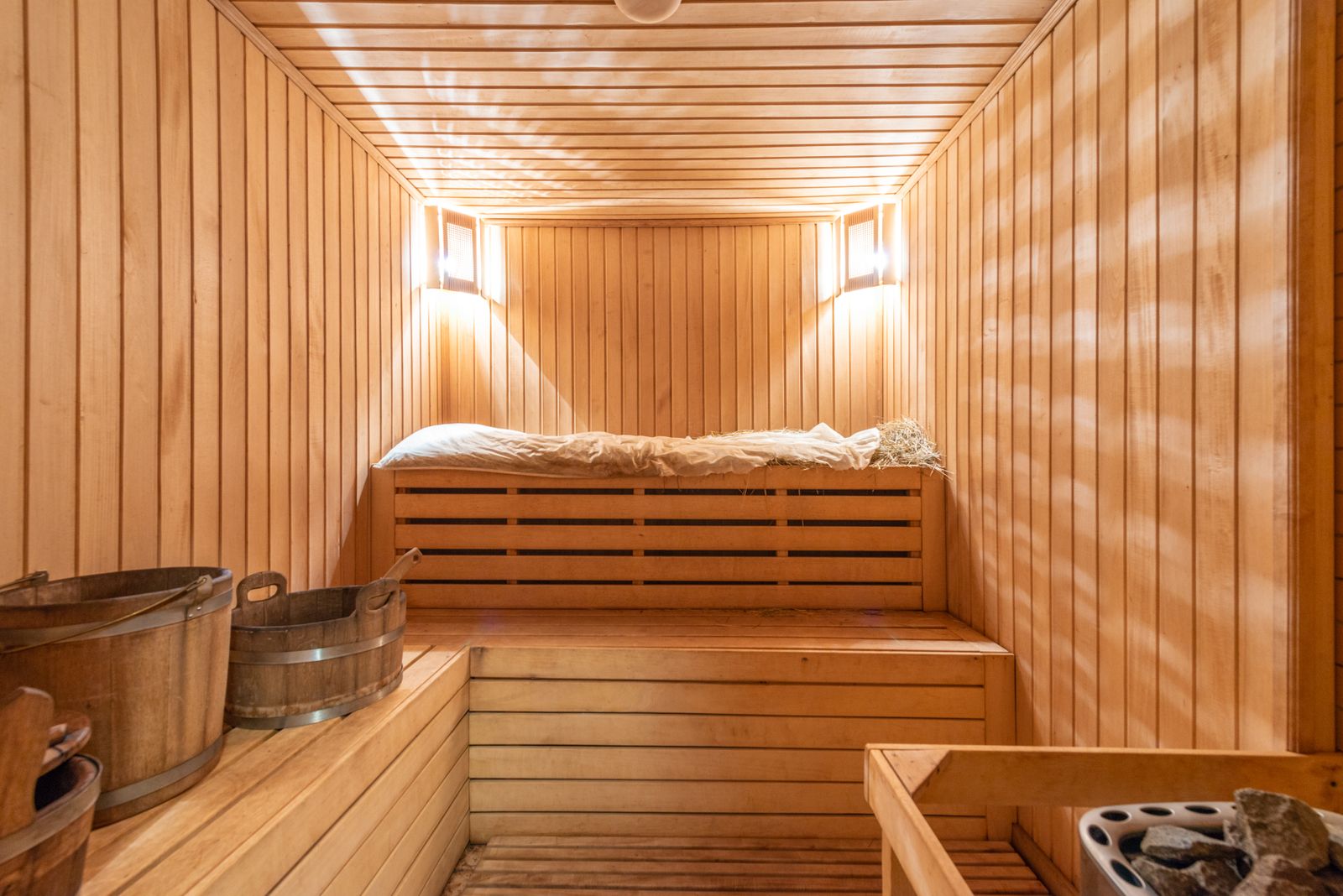
Dim the lights. Leave your phone outside. Decide, consciously, that this time is for nothing but unwinding. That small act of intention is what turns a heat session into a boundary around your day.
The session
Settle in and let go. A comfortable session is typically around 15 to 20 minutes in a traditional sauna, or 30 to 45 minutes in a gentler infrared cabin — these are common practice ranges, not clinically established doses. Breathe slowly, soften your shoulders, and let your attention rest on the warmth rather than your to-do list.
The cool-down
Do not rush back into busyness. Step out, cool gradually, and give yourself a few quiet minutes. Many people find this is when the session feels most settling. An evening cool-down may also suit a wind-down routine, though sauna's effect on sleep has not been well established.
Make It a Habit
Repetition is what makes any wind-down routine stick. When you return to the same ritual regularly — say three or four times a week — it becomes a dependable part of your week rather than something you have to remember. Many people find the routine itself becomes a cue to switch off.
Be clear-eyed about what that does and does not buy you: the controlled evidence has not shown that regular sauna use lowers measured markers of stress over time [1]. What it can do is give you a repeatable, pleasant reason to stop.
Take It Further: Pair Heat With Cold
Some people follow a sauna with a cold plunge or cool shower. The contrast is bracing and many find it leaves them feeling sharp and refreshed. This is a preference rather than an evidence-backed upgrade — we are not aware of controlled evidence that contrast therapy reduces stress more than heat alone. If you enjoy it, start gently with the cold and build up over time.
A Few Safety Basics
Hydrate before and after, keep sessions moderate, and listen to your body. Avoid alcohol before or during a session. If you are pregnant, have a heart condition, low blood pressure, or any medical concern — or you take regular medication — check with your doctor before using a sauna. If you feel dizzy or unwell, end the session and cool down.
The Elysian Solara Take
Stress is part of modern life, and the goal is not to eliminate it but to recover from it well and often. A sauna will not switch your stress response off, and the research does not claim it does. What it can do is make winding down something you look forward to rather than something you have to schedule willpower for. Build the ritual, repeat it, and take it for what it is.
FAQ: Sauna and Stress
Does a sauna relieve stress?
It can feel that way, and people who sauna regularly consistently report it as restorative [4]. But the controlled research is thin: a small 2005 trial found improved relaxation scores in mildly depressed inpatients [3], while studies measuring cortisol and heart-rate variability have not shown a stress-lowering effect in healthy adults [1,2]. Warm muscles, quiet time and a reliable habit are the honest benefits.
Does a sauna lower cortisol?
Not on the current evidence. One 2025 study found post-exercise infrared sauna initially raised next-morning cortisol before responses adapted over six weeks [2]. A sauna is best understood as a mild heat stressor your body adjusts to, not a way to reduce stress hormones.
How long should a relaxing sauna session be?
Around 15 to 20 minutes for a traditional sauna, or 30 to 45 minutes for a gentler infrared session. These are comfort-based ranges, not medical doses. Comfort matters more than pushing limits.
How often should I use a sauna?
Three to four moderate sessions a week is a sustainable rhythm for most people who enjoy it. Regularity helps the habit stick, though controlled trials have not shown that it lowers measured stress markers over time [1].
Should I add cold exposure?
Only if you enjoy it. Contrasting heat with a cold plunge or cool shower leaves many people feeling refreshed, but there is no good controlled evidence it beats heat alone for stress. Start gently and build up.
Build Your Wind-Down Ritual
At Elysian Solara, we help Australian homeowners design premium wellness spaces — saunas, ice baths, infrared therapy and recovery technology — built around long-term value and the way you actually want to feel.
Request a quote today and start planning your own private wellness space.
This article is general information only and is not medical advice. It does not describe the treatment or prevention of any medical condition. Speak with your doctor before starting sauna use, particularly if you are pregnant, have a cardiovascular condition, or take regular medication.
References
- Lee E, Ketelhut S, Wiklund P, Kostensalo J, Kolunsarka I, Hägglund H, Ahtiainen JP (2025). Regular postexercise sauna bathing does not improve heart rate variability: A multi-arm randomized controlled trial. Physiological Reports. PMID: 40611569
- Ahokas EK, Kyröläinen H, Ihalainen JK, Hanstock HG (2025). Salivary cortisol response to post-exercise infrared sauna declines over time. Temperature. PMID: 40926789
- Masuda A, Nakazato M, Kihara T, Minagoe S, Tei C (2005). Repeated thermal therapy diminishes appetite loss and subjective complaints in mildly depressed patients. Psychosomatic Medicine. PMID: 16046381
- Lennkvist M, Hägglund H, Engström Å (2025). Women's perceptions of sauna bathing and its impact on health and well-being: insights from a cross-sectional study. International Journal of Circumpolar Health. PMID: 41340471
- Henderson KN, Killen LG, O'Neal EK, Waldman HS (2021). The Cardiometabolic Health Benefits of Sauna Exposure in Individuals with High-Stress Occupations: A Mechanistic Review. International Journal of Environmental Research and Public Health. PMID: 33513711